An Intensive Care Unit, commonly called an ICU, is designed for patients who need closer monitoring and a higher level of medical support than a general hospital ward can provide. Admission to an ICU does not automatically mean that a patient's condition is hopeless or extremely critical. In many situations, intensive monitoring is used so that changes in vital functions can be identified quickly and managed appropriately.
For families in Sangamvadi and nearby areas of Pune, understanding how ICU care works can reduce uncertainty when a doctor recommends intensive monitoring.
What Makes ICU Care Different?
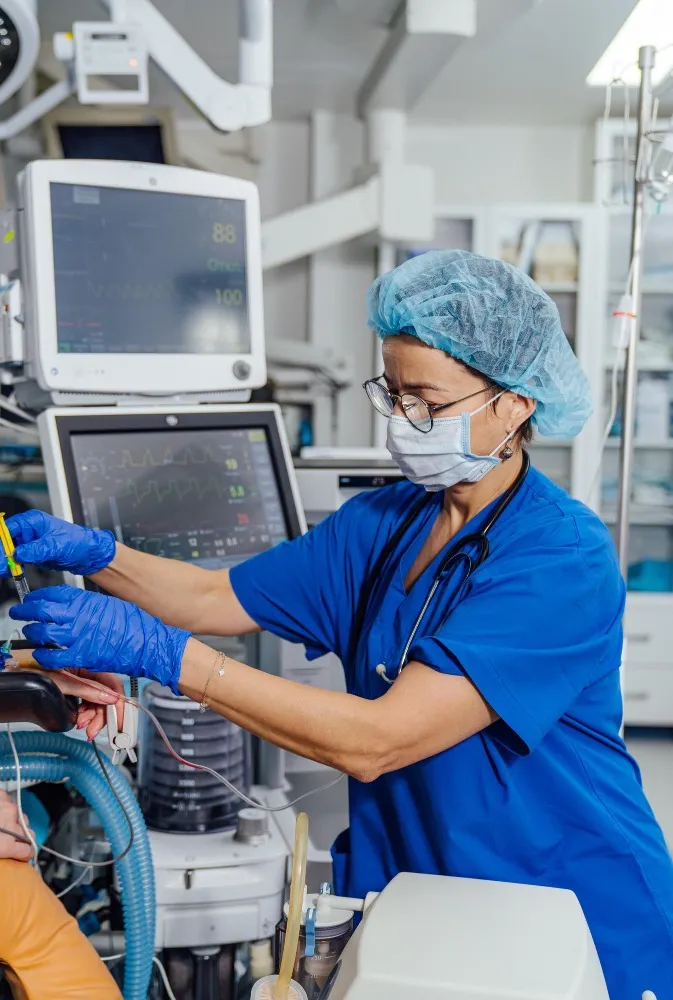
Patients in an ICU may require continuous observation of important parameters such as heart rate, blood pressure, oxygen saturation, breathing pattern, temperature, and other clinical indicators.
Depending on the patient's condition, ICU support may involve:
- Continuous cardiac monitoring
- Oxygen therapy
- Ventilatory support when necessary
- Intravenous medicines and fluids
- Frequent blood investigations
- Monitoring of urine output
- Management of infections
- Post-operative observation
- Specialist consultations
The exact level of support varies from one patient to another.
When May ICU Admission Be Recommended?
Doctors consider ICU admission when a person's condition requires closer supervision than can safely be provided in a routine ward.
Examples may include severe breathing difficulty, major infections, unstable blood pressure, significant trauma, certain cardiac emergencies, neurological emergencies, organ dysfunction, or complications following major surgery.
Some patients are also admitted for planned post-operative monitoring because their age, underlying medical conditions, or complexity of surgery requires additional observation.
Why Continuous Monitoring Matters
A major advantage of an ICU is the ability to detect clinical changes quickly.
Blood pressure may suddenly fall. Oxygen levels can change. A patient's breathing pattern may deteriorate. Heart rhythm abnormalities may develop. In critically ill patients, identifying such changes early can influence how quickly treatment is adjusted.
This is why ICU care involves not only equipment but also coordinated medical and nursing observation.
What Families Can Expect
Seeing a family member surrounded by monitors, tubes, intravenous lines, and medical equipment can be stressful. Understanding what these devices do often makes the environment easier to comprehend.
Family members can ask the treating team questions such as:
- What is the main reason for ICU admission?
- Which vital functions are being monitored?
- Has the patient's condition changed?
- What treatment is currently being given?
- What improvement is required before transfer to a ward?
- Are there specific visiting precautions?
Clear communication helps families understand the treatment process without relying on assumptions.
When Can a Patient Leave the ICU?
Transfer from intensive care usually depends on clinical stability rather than a fixed number of days.
A patient may be moved to a regular ward when breathing, circulation, neurological condition, and other relevant functions are sufficiently stable and intensive monitoring is no longer considered necessary.
Some people require only short-term observation, while patients with complex illnesses may need longer ICU care.
West Valley Multispeciality Hospital provides multispeciality medical services in the Dhole Patil Road area of Pune, with care covering several medical and surgical specialties.
For people in Sangamvadi, the important point is to understand that ICU admission is based on the level of monitoring and treatment a patient requires. When a serious illness, major surgery, or sudden deterioration occurs, timely assessment helps the medical team determine whether intensive care is appropriate.
Keywords